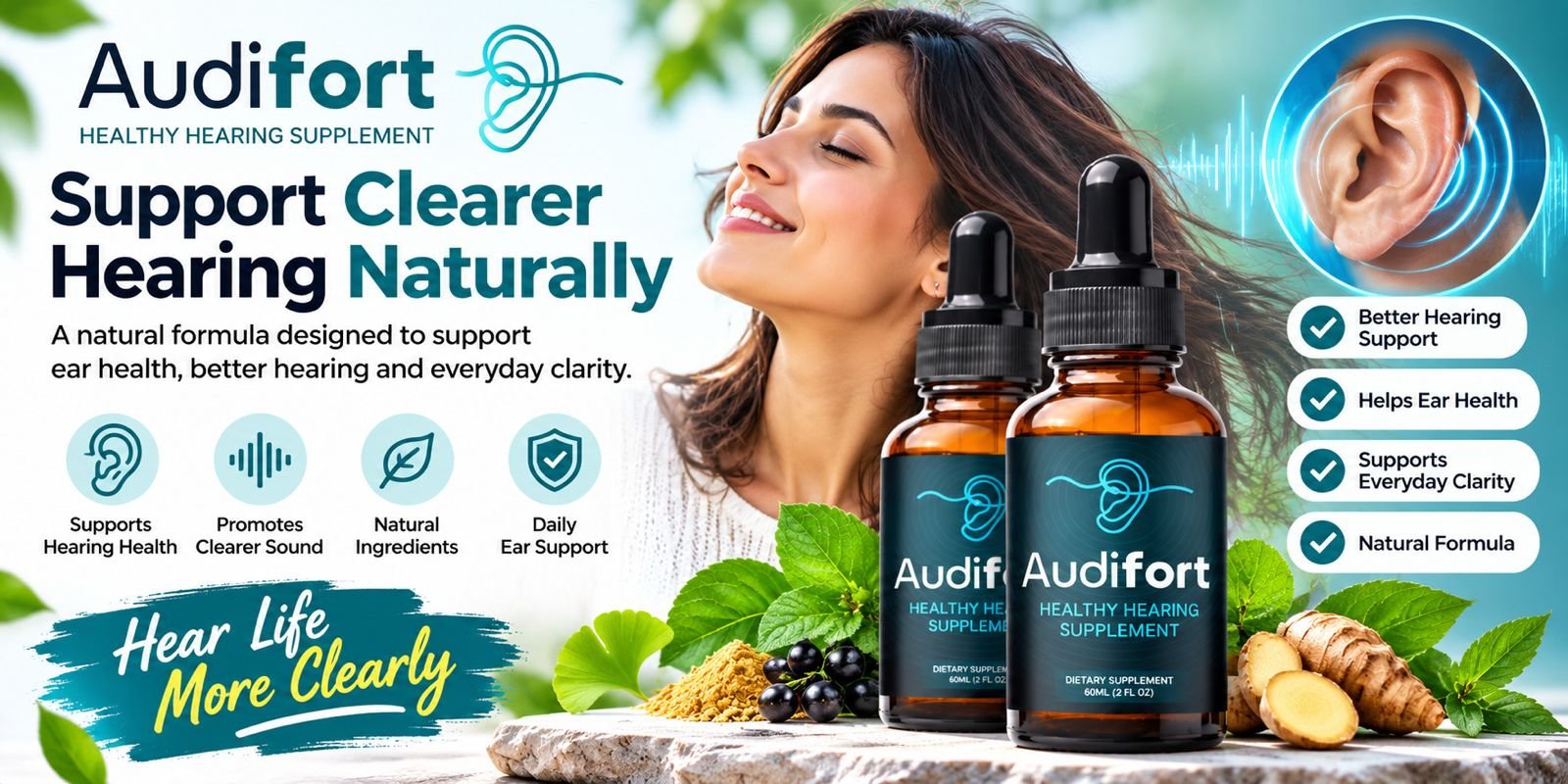
If you have been searching for Audifort reviews, you may have come across claims that this hearing support supplement can help with ringing ears, auditory comfort, and age-related hearing concerns. But does Audifort really work, are its ingredients supported by scientific evidence, and is it worth the money?
These are important questions, especially if tinnitus or hearing difficulties are affecting your sleep, conversations, concentration, or daily activities.
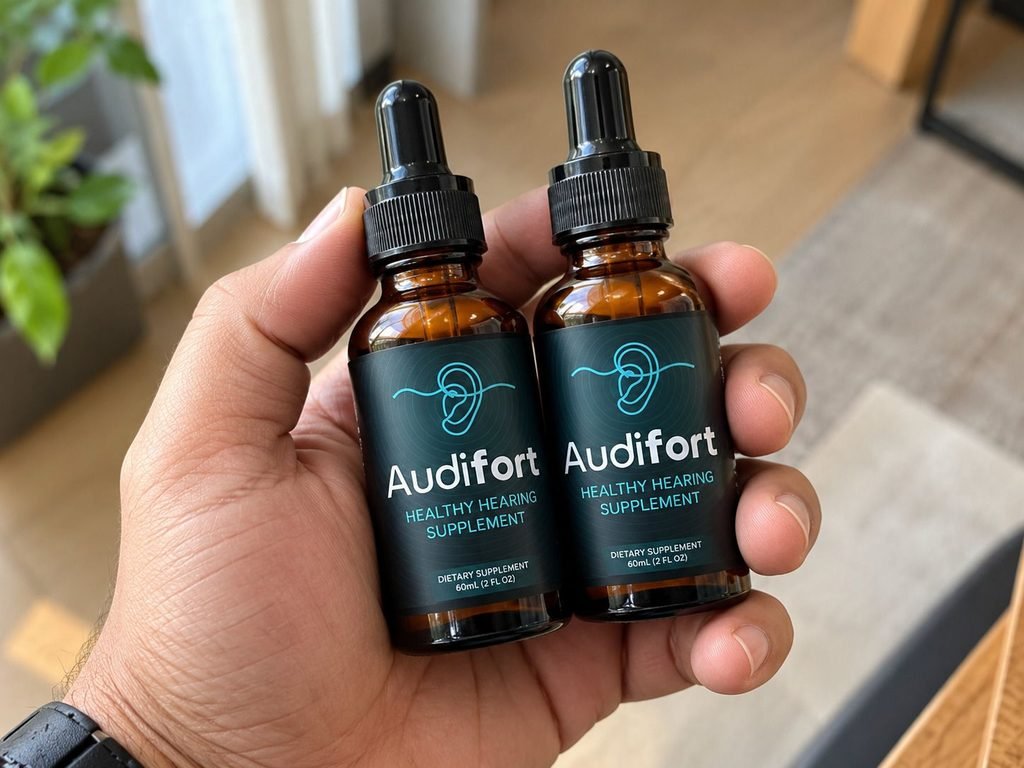
Audifort is marketed as a dietary supplement intended to support ear health. Depending on the promotional material, it is described as a liquid formula or a capsule-based product. Its advertising focuses on ingredients that may support general nerve function, antioxidant activity, and other aspects of health associated with normal auditory function.
However, there is an important distinction between an ingredient having a plausible biological benefit and a finished supplement being clinically proven to improve hearing.
In this Audifort review for 2026, we examine the available product descriptions, reported ingredients, potential benefits, scientific limitations, side effects, pricing considerations, customer complaints, and questions to investigate before purchasing.
Our initial verdict: Audifort should be approached cautiously. The available information does not establish that the complete formula reliably relieves tinnitus or restores lost hearing. Anyone experiencing persistent hearing problems should consider a professional hearing evaluation before spending money on an unproven supplement.
Want to check Audifort’s current availability?
[Check Audifort Official Website →]
What Is Audifort?
Audifort is marketed as a dietary supplement for adults interested in auditory hearing support and general ear wellness. Promotional descriptions associate it with concerns such as ringing in the ears, reduced hearing clarity, sound sensitivity, and age-related auditory changes.
The product is promoted as a nutritional approach rather than a conventional hearing aid. Its marketing suggests that selected vitamins, minerals, and botanical ingredients may support biological processes involved in normal nerve function and cellular health.
However, Audifort should not be confused with a medically established treatment for hearing loss or tinnitus.
Tinnitus is the perception of sounds such as ringing, buzzing, humming, or hissing when there is no corresponding external sound. It can have several causes, including hearing loss, noise exposure, certain medications, and other ear-related or medical conditions.
Because the underlying causes differ, a supplement that provides a nutrient someone lacks cannot be assumed to help every person experiencing tinnitus.
Want to check Audifort’s current availability?
[Check Audifort Official Website →]
Audifort at a glance
| Feature | Details |
|---|---|
| Product name | Audifort |
| Product category | Dietary supplement |
| Main marketing focus | Hearing support and ear wellness |
| Intended audience | Adults interested in auditory health |
| Product format | Verify whether the current product is liquid or capsules |
| Ingredients | Check the current product label |
| Scientific evidence | Product-specific effectiveness remains unestablished in the supplied reviews |
| Possible benefits | Depend on the ingredients, dosage, and individual circumstances |
| Possible side effects | Depend on the formulation and personal health factors |
| Purchase considerations | Verify the seller, total cost, and refund conditions |
This overview provides a starting point, but it does not confirm that Audifort treats a medical condition or delivers the results described in promotional material.
Learn more about Audifort and see the current offer →
How Does Audifort Reviews Work?
According to its marketing, Audifort is intended to support auditory function through nutritional ingredients associated with circulation, antioxidant activity, and nerve health.
Understanding these proposed mechanisms can help consumers distinguish reasonable nutritional claims from promises that require stronger evidence.
1. Supporting normal nerve function
The auditory system depends on communication between the inner ear, auditory nerve, and brain. Certain nutrients, including vitamin B12, are essential for normal nervous system function.
A deficiency in a relevant nutrient can cause health problems. Correcting a confirmed deficiency may improve the symptoms associated with that deficiency.
However, taking additional nutrients does not automatically improve nerve function in someone who already has adequate levels. Nor does nutritional support establish that a supplement can repair damaged auditory structures.
Learn more about Audifort and see the current offer →
2. Providing antioxidant nutrients
Some Audifort descriptions mention grape seed extract, green tea extract, and other plant-derived ingredients.
Antioxidants are studied for their role in protecting cells from oxidative stress. Research involving particular compounds may provide reasons to investigate their possible relationship with auditory health.
Nevertheless, findings from laboratory experiments or animal studies cannot establish that a commercial supplement reduces tinnitus in humans.
The exact dose, formulation, absorption, and results of human clinical trials all matter.
3. Supporting general nutritional health
Ingredients such as zinc, magnesium, and vitamin B12 have established roles in normal bodily functions.
If someone has a nutritional deficiency, correcting it may be beneficial. But a supplement should not be treated as a universal solution for ringing ears, muffled hearing, or age-related hearing loss.
The key limitation: A proposed mechanism explains how an ingredient might influence the body. It does not prove that Audifort itself produces a meaningful hearing benefit.
Learn more about Audifort and see the current offer →
Audifort Reviews Ingredients List: What Should You Check?
One of the most important parts of any Audifort review is the ingredient list.
The supplied competitor articles describe different formulations. Some mention liquid drops containing ingredients such as maca root, grape seed extract, green tea extract, capsicum, Gymnema sylvestre, and GABA. Another review describes a capsule-based blend featuring ginkgo biloba, zinc, magnesium, vitamin B12, grape seed extract, and garlic extract.
These descriptions are not consistent enough to establish a definitive ingredient list for the product currently being sold.
Before purchasing, compare the actual packaging and Supplement Facts panel with the claims on the sales page.
Ginkgo biloba
Ginkgo biloba is a botanical ingredient frequently marketed for circulation and cognitive health. It has also been studied in connection with tinnitus.
However, research has not established ginkgo as a reliable treatment for tinnitus. Evidence about an ingredient’s general biological effects should not be confused with proof of a clinical benefit for ringing ears.
Ginkgo may also interact with medicines, particularly those affecting blood clotting.
Zinc
Zinc supports immune function, cellular processes, and normal physiological development.
A person with zinc deficiency may benefit from appropriate supplementation. That does not mean taking extra zinc will improve hearing in someone whose zinc levels are already sufficient.
Excessive zinc intake can cause nausea and other problems. Long-term excessive intake may also interfere with copper absorption.
Magnesium
Magnesium is involved in nerve function, muscle function, and many biochemical reactions.
It is an essential mineral, but evidence that magnesium supplementation reliably treats tinnitus is insufficient to support broad treatment claims.
The appropriate intake depends on individual circumstances. Supplemental magnesium can cause digestive symptoms, including diarrhea, and may interact with some medications.
Vitamin B12
Vitamin B12 is important for red blood cell production and normal neurological function.
A deficiency can cause neurological symptoms, making assessment and treatment appropriate when a deficiency is suspected or confirmed.
However, vitamin B12 is not an established cure for tinnitus or permanent hearing loss in people without a relevant deficiency.
Grape seed extract
Grape seed extract contains antioxidant compounds called proanthocyanidins.
These compounds have been studied for their biological properties, including antioxidant activity. Nevertheless, evidence that grape seed extract in Audifort improves hearing or reduces tinnitus remains insufficient.
Green tea extract
Green tea extract contains compounds known as catechins, including epigallocatechin gallate (EGCG).
Although these compounds are studied for various health effects, research on their general properties does not demonstrate that a particular Audifort formulation improves hearing.
Concentrated green tea extracts can also carry safety considerations, including potential liver-related risks in some circumstances.
GABA, maca root, and other botanicals
Some supplied product descriptions mention GABA, maca root, capsicum, and Gymnema sylvestre.
Their presence and quantities should be confirmed on the current label rather than assumed from another review.
Even when an ingredient has been studied for stress, metabolism, or another biological function, that research does not automatically demonstrate a benefit for tinnitus.
Ingredient verdict: The ingredients discussed in Audifort marketing have different levels of evidence for different purposes. The supplied materials do not establish that the finished product has been proven effective in well-controlled human clinical trials.
Does Audifort Reviews Really Work for Tinnitus?
This is the central question behind searches for Audifort tinnitus relief.
At present, the supplied competitor articles do not provide independently verifiable clinical evidence demonstrating that the complete Audifort formula reliably reduces tinnitus or restores hearing.
Some reviews describe possible improvements after several weeks of use. Other descriptions acknowledge that results vary and that some customers report no noticeable benefit.
Testimonials can describe personal experiences, but they cannot establish whether a product caused an improvement. Tinnitus symptoms can fluctuate naturally, and expectations, stress, sleep, hearing protection, and other interventions may affect how symptoms are perceived.
What results are realistic?
It is sensible to separate three different possibilities:
- Correcting a nutritional deficiency: Appropriate supplementation may help when a relevant deficiency is contributing to a health problem.
- Supporting general health: Some ingredients provide nutrients or compounds associated with normal physiological functions.
- Treating tinnitus or hearing loss: This requires evidence that the specific intervention improves the relevant condition. General nutritional benefits are not enough.
There is no reliable basis in the supplied materials for promising that Audifort will produce results within a particular number of days or weeks.
Be cautious of claims that it will eliminate ringing, restore damaged hearing, reverse age-related hearing loss, or deliver guaranteed results.
A person with persistent symptoms should seek an evaluation to identify possible causes and discuss evidence-based management options.
Audifort Reviews and Complaints: What Do Customers Say?
Searches for Audifort reviews and complaints reflect a reasonable desire to learn about a product before spending money.
The supplied competitor articles describe mixed experiences. Some report favorable testimonials involving reduced awareness of ringing, improved perceived ear comfort, or easier daily use. Other descriptions mention disappointment, a lack of noticeable results, price concerns, shipping delays, and questions about customer service.
However, the supplied material does not provide enough independently verifiable evidence to establish how common these experiences are or whether the testimonials represent a representative sample of customers.
Positive feedback
Positive product descriptions commonly emphasize convenience and the hope of finding support for everyday hearing concerns.
Some testimonials claim gradual improvement after consistent use. Such accounts may be useful for understanding what individual buyers say, but they should not be treated as proof of effectiveness.
When reading positive reviews, ask whether the reviewer identifies the purchase date, describes the specific product formulation, explains the outcome, and discloses any financial relationship with the seller.
Negative feedback and complaints
Potential concerns worth investigating include:
- No noticeable improvement after purchase.
- A price that seems high relative to the perceived benefit.
- Unclear or changing descriptions of the formula.
- Confusion about the number of servings in a bottle.
- Shipping delays or difficulty contacting customer support.
- Uncertainty about return eligibility and refund processing.
These are issues to investigate, not independently verified findings about the frequency of Audifort complaints.
Before ordering, read the complete purchase terms and retain your confirmation email, receipt, and a copy of the refund policy.
Audifort Reviews Scam or Legit? An Honest Assessment
Is Audifort a scam or a legitimate supplement?
That question cannot be answered responsibly with an unconditional yes or no based only on promotional pages and competing review articles.
A product may be sold as a real dietary supplement without having convincing evidence for every advertised benefit. Similarly, the existence of a product or a functioning checkout page does not establish the trustworthiness of every seller or marketing claim.
Warning signs to look for
1. Guaranteed hearing restoration
Be skeptical of claims that a supplement permanently restores hearing, reverses nerve damage, or cures tinnitus. These are substantial medical claims that require strong supporting evidence.
2. Unclear ingredient quantities
A label that hides relevant quantities behind a proprietary blend can make it difficult to compare the formula with research or assess the total amount of each ingredient.
3. Unsupported testimonials
A collection of highly positive testimonials is not equivalent to a controlled clinical trial. Look for independent evidence and consider whether financial incentives could influence the presentation.
4. Unclear company information
Check whether the seller provides identifiable business information, working customer support, clear ordering terms, and a usable refund process.
5. Pressure to purchase immediately
Countdown timers, claims of extraordinary savings, and repeated warnings that an offer will disappear should not replace careful consideration of the product’s evidence and price.
6. Confusing refund promises
A money-back guarantee is only as useful as its actual written terms. Check the eligibility period, whether opened bottles qualify, return shipping costs, and any other conditions.
Our legitimacy verdict
The supplied sources do not establish enough independently verified information to label Audifort definitively a scam or to endorse it as a proven hearing treatment.
A cautious consumer should verify the product’s identity, current label, seller information, purchase conditions, and supporting evidence before ordering.
Audifort Reviews Side Effects and Safety Considerations
Even products marketed as natural can cause side effects or interact with medication.
Because the supplied descriptions do not consistently identify the exact Audifort formulation and ingredient quantities, it is not possible to give a reliable product-specific estimate of its side-effect rate.
Potential concerns depend on which ingredients are actually present.
For example, ginkgo and garlic extracts may increase bleeding risk in certain circumstances. Zinc can cause nausea when taken in excessive amounts, while magnesium supplements can cause diarrhea. Concentrated green tea extracts have also been associated with liver-related safety concerns.
These are ingredient-specific considerations, not proof that every Audifort user will experience these effects.
Who should seek medical advice before use?
Speak with a qualified healthcare professional before starting Audifort if you:
- Take prescription medicines, particularly anticoagulants or antiplatelet medicines.
- Have a diagnosed medical condition.
- Have liver or kidney problems.
- Are pregnant or breastfeeding.
- Have known allergies to any listed ingredient.
- Already take other supplements containing the same nutrients.
Do not exceed the label’s recommended dose or combine products without checking their ingredients.
Stop using a supplement and seek appropriate medical advice if you experience a concerning reaction.
Important: Sudden hearing loss, especially when it develops over hours or a few days, requires urgent medical assessment. Do not delay care while trying a supplement. Ringing accompanied by sudden hearing changes, severe dizziness, or other concerning symptoms also warrants prompt evaluation.
Audifort Reviews Price, Discounts, and Value for Money
The search terms Audi fort discount, Audifort worth, and Audifort official website indicate that buyers also want to understand the financial commitment.
The supplied competitor articles quote different prices and package offers, including single-bottle prices of approximately $49–$69 and lower per-bottle prices for multi-bottle purchases. These figures are not independently verified current prices and may refer to different offers or product descriptions.
For that reason, check the current checkout page instead of relying on an older review.
Before choosing a package, calculate the complete cost rather than comparing the advertised price per bottle alone.
Consider the following:
- Total charge, including shipping and taxes.
- Number of bottles and servings included.
- Whether the order is a one-time purchase or recurring subscription.
- Whether discounts apply automatically or require a code.
- The refund deadline and return shipping requirements.
- Whether the seller provides a clear customer service contact.
Is a larger bundle better value?
A multi-bottle bundle may reduce the advertised cost per bottle, but it also requires a larger upfront payment.
If the product’s effectiveness is uncertain, buying more bottles does not make it more likely to work. Avoid committing to a large package simply because the seller presents it as the best deal.
A sensible purchasing decision considers affordability, the strength of the evidence, potential risks, and whether a professional evaluation would be a better use of the money.
Audifort Reviews Official Website: What Should You Verify?
People searching for the Audifort official website should take care to distinguish the manufacturer’s own sales channel from independent review pages, advertisements, and unauthorized sellers.
The supplied materials do not establish a single independently verified official purchasing destination, so this review does not designate a particular website as authentic.
Before entering payment information, confirm the following:
- The product name and packaging match the item being advertised.
- The complete ingredient list and serving information are available.
- The seller provides identifiable contact information.
- The total purchase price is displayed before payment.
- The return and refund conditions are written clearly.
- The checkout does not add unwanted recurring charges.
- The seller’s claims do not promise guaranteed medical outcomes.
Be especially cautious if the checkout page uses a different product name, lists a different formula, or presents conditions that were not visible in the original advertisement.
Save the product label and order confirmation in case you need to ask questions about the purchase later.
Is Audifort Reviews Worth It?
Whether Audifort is worth considering depends on your expectations, health circumstances, budget, and the quality of the evidence available for the exact formulation.
Its marketing may appeal to people who prefer a nutritional product to a pill-based routine or who are exploring possible support for auditory wellness. However, convenience and appealing ingredients do not establish that the product relieves tinnitus.
Audifort may be worth researching if:
- You want to examine the ingredients of a hearing support supplement.
- You understand that benefits for tinnitus have not been established for the complete formula in the supplied materials.
- You can verify the current product label and seller information.
- You have reviewed possible interactions with a healthcare professional when appropriate.
- You can afford the purchase without relying on a promised medical outcome.
It may not be a sensible choice if:
- You expect it to cure tinnitus or restore permanent hearing loss.
- You intend to use it instead of a hearing assessment.
- You take medication that may interact with its ingredients.
- You cannot verify the product’s composition or refund terms.
- Buying it would create financial pressure.
For many people, a professional hearing assessment is a more useful first step than purchasing a supplement with uncertain effectiveness.
Better Ways to Manage Tinnitus and Hearing Concerns
If ringing ears or reduced hearing clarity are affecting your life, there are established ways to investigate the problem.
Arrange a hearing evaluation
An audiologist or other appropriate healthcare professional can assess hearing and help determine whether further medical investigation is necessary.
A hearing assessment can also help identify hearing loss that might benefit from hearing aids or other appropriate interventions.
Review possible causes
Tinnitus may be associated with hearing loss, loud-noise exposure, earwax blockage, medication effects, or other conditions.
Do not assume that every case has the same cause or that a nutritional supplement addresses the underlying issue.
Protect your hearing
Avoid excessive noise exposure and use suitable hearing protection in loud environments. If you use headphones, keep the volume at a reasonable level and take breaks.
Consider evidence-based tinnitus support
Depending on the diagnosis and symptoms, a healthcare professional may discuss hearing aids, sound-based approaches, tinnitus-focused cognitive behavioral therapy, or other management options.
The appropriate choice depends on the individual. No single strategy is guaranteed to eliminate tinnitus for everyone, but professional guidance can help identify options supported by better evidence.
Frequently Asked Questions About Audifort Reviews
1. What is Audifort?
Audifort is marketed as a dietary supplement intended to support auditory health and ear wellness. Its promotional descriptions associate it with tinnitus and hearing-related concerns. The current product format and exact ingredients should be verified on the packaging before purchase.
2. How does Audifort work?
Marketing materials suggest that its ingredients support processes such as normal nerve function and antioxidant activity. However, a proposed biological mechanism does not prove that the complete Audifort formula improves hearing or reduces tinnitus in clinical use.
3. What is the Audifort Reviews ingredients list?
The supplied reviews describe different combinations of ingredients, including ginkgo biloba, zinc, magnesium, vitamin B12, grape seed extract, green tea extract, maca root, and GABA. These lists conflict, so the current product label is the most appropriate source for confirming the actual formula.
4. Does Audifort provide tinnitus relief?
The supplied materials do not establish that Audifort reliably relieves tinnitus. Individual testimonials cannot confirm effectiveness, and results from studies of individual ingredients cannot automatically be applied to the finished product.
5. Is Audifort a scam or legit?
The available material is insufficient to make a definitive determination about every seller or to confirm the supplement’s effectiveness. Verify the seller’s identity, product label, payment terms, and refund policy, and be cautious of claims promising a cure.
6. What are the possible Audifort side effects?
Potential effects depend on the actual ingredients and their quantities. Certain supplements may cause digestive symptoms or interact with medication. Review the label with a healthcare professional if you have a medical condition or take prescription medicines.
7. How long does Audifort Reviews take to work?
There is no established timeline for results from the complete formula in the supplied materials. Claims that users should notice improvements after a specific number of weeks should not be interpreted as a clinically proven schedule.
8. How much does Audifort Reviews cost?
The supplied reviews quote different prices, generally ranging from approximately $49 to $69 for some single-bottle offers, with other prices for bundles. These figures are not verified current prices. Check the full checkout total and return conditions before ordering.
9. Is Audifort FDA-approved?
Dietary supplements are not FDA-approved for safety and effectiveness in the same way as prescription medicines before they are marketed. Claims about manufacturing standards or facility registration should not be confused with FDA approval of a supplement to treat tinnitus.
10. Where can I buy Audifort?
Confirm the identity of the seller and compare the product label, customer support details, payment terms, and refund policy before purchasing. Do not assume that a page described as official is authentic without checking its details.
11. Is Audifort Reviews worth the money?
That depends on the price, verified ingredients, personal circumstances, and your expectations. Because the effectiveness of the complete formula has not been established in the supplied sources, it would be unwise to pay a premium based on promises of hearing restoration.
12. Can Audifort replace hearing aids or medical treatment?
No. Audifort should not be treated as a replacement for hearing aids, an audiological assessment, or appropriate medical care. Persistent or sudden hearing changes require professional evaluation.
Final Verdict: What Do Audifort Reviews Tell Us?
Our assessment of Audifort reviews for 2026 is cautious.
Audifort is marketed as a hearing support supplement containing ingredients associated with general nutritional and biological functions. However, the supplied competitor articles offer inconsistent information about its formulation, dosage, price, and refund terms. They also do not provide enough independently verifiable evidence to establish that the complete product reliably reduces tinnitus or restores hearing.
Positive testimonials may reflect individual experiences, but they cannot guarantee similar outcomes for other customers. Likewise, the presence of familiar vitamins or botanical extracts does not establish that the finished formula is effective.
Before buying, verify the actual ingredient label, identify the seller, calculate the full cost, and read the refund policy carefully. Speak with a healthcare professional if you take medication or have an existing medical condition.
Most importantly, do not delay a hearing assessment in the hope that a supplement will solve the problem. Sudden hearing loss needs urgent medical attention, while persistent tinnitus deserves an appropriate evaluation.
Bottom line: Audifort may interest consumers researching nutritional hearing support, but its product-specific benefits remain uncertain based on the supplied evidence. Make your decision using verified product information and realistic expectations rather than testimonials or promises of a cure.
Medical disclaimer: This article is for informational and educational purposes only. It does not provide medical advice, diagnose conditions, or recommend Audifort as a treatment. Consult a qualified healthcare professional about hearing symptoms, tinnitus, supplement safety, and possible medication interactions.
Learn more about dizziness and balance problems.
Learn more about erectile dysfunction and its causes.
Explore our guide to nerve health and discomfort.